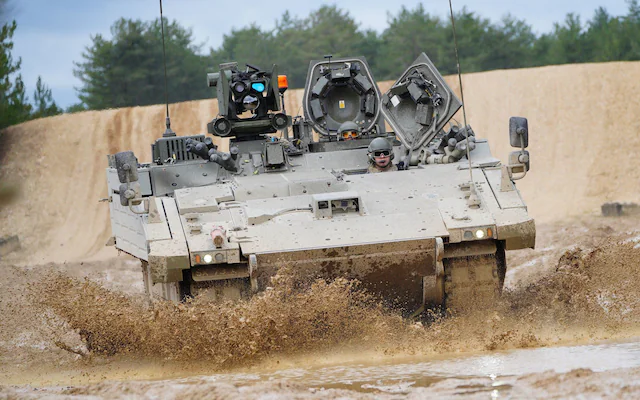
British Army Grounds Ajax Fleet After 31 Soldiers Fall Ill During Exercise

The British Army has suspended use of its Ajax armoured fighting vehicle following a serious safety incident that left dozens of soldiers unwell. The decision comes after 31 personnel reported symptoms including vomiting, disorientation, loss of balance, headaches and ringing in the ears — all linked to excessive noise and vibration while inside the vehicle. (Forces News)
What Happened
The illnesses occurred during a recent training exercise on Salisbury Plain. Troops from units including the Household Cavalry and the Royal Lancers spent long periods — reportedly 10 to 15 hours — inside Ajax vehicles, after which the health issues emerged. In some cases, soldiers emerged shaking violently or unable to control their bodies; in others, symptoms included tinnitus and loss of balance.
The Army immediately halted the exercise and tested all personnel involved. Of the 31 affected, most have since been cleared for duty, but a “small number” remain under medical care as investigations continue.
Suspension of the Ajax Programme
In response to the incident, the Ministry of Defence (MoD) ordered a two-week suspension of all use of the Ajax vehicle for training and exercises “out of an abundance of caution.” Officials say a full safety investigation has been launched to determine whether the vehicles remain fit for purpose. (Forces News)
The suspension is a major blow for the programme behind Ajax — a multi-billion-pound effort to modernise the Army’s armoured vehicle fleet. The vehicle, which has faced repeated controversies over noise, vibration and safety during its long development, had only recently been declared operational. (Forces News)
Persistent Safety Concerns
Critics argue the latest incident reaffirms long-standing concerns about Ajax’s viability. Despite earlier assurances from ministers — including that previous noise and vibration issues had been resolved — the recurrence of serious health problems among troops suggests the mitigation measures (such as dual-layer hearing protection) are insufficient. (Forces News)
The repeated health incidents also raise deeper questions about the procurement, testing and deployment processes of defence equipment — and whether the safety of personnel has been properly prioritised. As one defence analyst commented: “If you have paused use of the vehicles, then there is something wrong.” (Forces News)
Implications for UK Defence and the Army
The grounding of Ajax affects not just current training cycles, but also the broader mechanisation strategy of the British Army. With hundreds of vehicles planned under the programme, any prolonged suspension could delay planned upgrades and impact operational readiness.
For soldiers, the episode may create distrust in the equipment they are expected to rely on — especially under high-stress, high-threat conditions. For the MoD, the challenge now is to restore confidence while balancing urgent operational demands with the health and safety of personnel.
What Happens Next
Over the coming weeks, the MoD’s investigation will aim to establish whether the problem lies with the design of the Ajax vehicle, insufficient mitigation measures, or the conditions under which it was operated. Until then, all Ajax-equipped regiments are barred from using the vehicle for training or operations.
Meanwhile, deeper questions loom about whether the Ajax programme can continue in its current form — or whether a redesign or replacement may be necessary. Given both the financial cost and the strategic importance of mechanised capabilities, the outcome will be closely watched by defence officials, military personnel and policymakers alike.