Why Everyday Life in Britain Feels Harder Than It Should
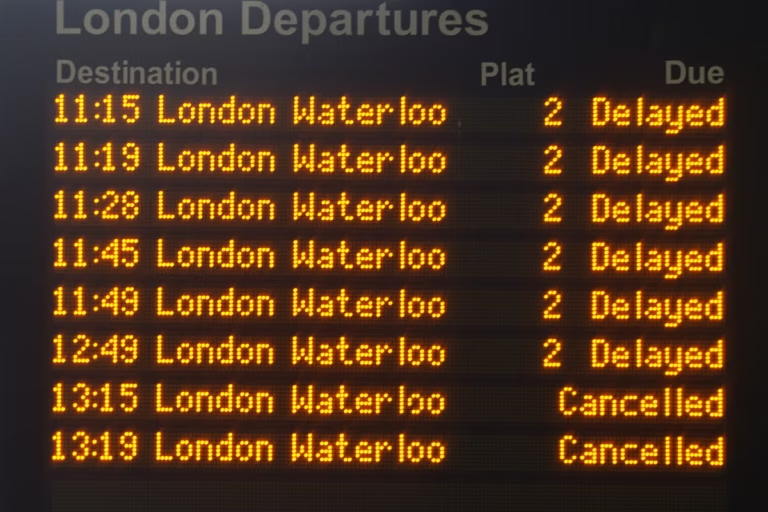
If mornings feel less “rise and shine” and more “push the snooze button five times,” you’re not alone. Across the UK, people are dragging themselves out of bed only to be greeted by bills that feel unreal, bad news on breakfast TV, and trains that just get cancelled. That’s before you even start your day at work. Life isn’t collapsing dramatically. It’s just quietly exhausting, in that very British way where we all smile tightly and pretend it’s normal.
So why does daily life feel such hard work, and when exactly did doing the basics become an endurance test?
Cost of living (aka Britain’s never-ending money drain)
Whether supermarket shopping, energy bills, or the price of a Pret sandwich, the cost of living crisis has wormed its way into every corner of daily life. Food is one of the biggest shocks. Basics like pasta, milk and bread quietly jumped in price, portions seem smaller, and quality has gone out the window. The “weekly shop” triggers instant anxiety and a visit to the yellow sticker section.
Energy bills aren’t helping either, with the national energy debt rising to a record £4.4bn. Families are paying more to live exactly the same way on the same wages.
Housing headaches
Housing is where dreams collide with reality. Renting is eye-wateringly expensive and buying a home feels impossible, especially for anyone under 40. Landlords hike rents just because they can, mortgage rates swing unpredictably, and deposits require a lottery win. Even when you do get a foot on the property ladder, you’re paying so much that you may have to live on beans on toast for the next decade.
Public services: On the edge
Britain used to pride itself on decent public services. Now it feels like the NHS, schools and transport are collectively running on hope alone:
- The NHS. Trying to see a doctor requires the reflexes of a ninja. Phone lines open at 8am, appointments vanish by 8:01, and you’re waiting two weeks to see a doctor. Hospitals do their absolute best, but with fewer resources, more pressure and endless backlogs, delays have just become “normal”.
- Transport. Getting around the UK is its own challenge. Trains are delayed or cancelled by a quick announcement at 10.30pm of, “This train will go out of service at Doncaster.” Buses seem to run once a week in rural areas and are super expensive in busy cities. Then there are strikes over pay and working conditions, which create even more chaos.
- Education. Schools are bursting at the seams, teachers are maxed out and threatening to strike over funding issues following the Budget. Higher education isn’t faring much better, with complaints from students reaching record highs last year and universities facing financial challenges too.
- Department for Work and Pensions (DWP). The DWP has become a source of daily frustration for many. Well done if you can get through the hoops of the “virtual agent” phone system and reach a human in less than an hour. Resolving your problem is another battle. Complaints doubled in the past year, often about month-long delays, procedural failures, or poor customer service.
Everyday challenges
Outside of the bigger issues, the little things can also cause us to feel stressed and lose our sense of optimism for the future:
- The weather. Britain’s weather has always been unpredictable and something Brits like to moan about. Recently though, it seems unhinged. Winter lasts forever and Vitamin D does nothing to ease the seasonal depression. Then summer is a heatwave with no AC. You can’t win.
- Drivers. Road behaviour has shifted from polite hesitation to outright mayhem. People changing lanes and undertaking, blasting horns, and driving with full beam lights when passing other cars in the dark. Even a simple school run feels like an F1 circuit.
- High streets. The decline continues. Local shops flicker out one by one, replaced by vape stores, charity shops, and barber shops. What used to be the beating heart of British towns now feels like a ghost of itself and a reminder that convenience and online shopping now rule.
So what can we actually do?
Nobody can single-handedly fix the economy or magically restore the NHS, but there are small things that help take the edge off the national exhaustion. Finding a bit of community again can make the UK feel far less overwhelming when people stop quietly struggling on their own. Chat to neighbours, make tiny plans, swap a smile with the person in front of you at the till; it all helps. Get outside when you can, even if it’s drizzling sideways, because fresh air has a way of reminding your brain it’s still attached to a functioning human being. And above all, protect your boundaries as burnout is everywhere, and resting isn’t laziness, it helps you reset.
The bottom line
Everyday life in Britain feels harder because the country is running on systems that haven’t kept up with the pressures people are under. Everything takes more money, more time and more emotional energy than it should. But Brits have weathered worse in the past. Between the dark humour, the shared misery, the tiny joys, and the national talent for making the best of a bad situation, there’s still hope. Britain might be struggling, but its people aren’t done yet. And despite the frustration, there’s something about this messy, rainy island that we’re still fiercely attached to.
- International Puzzle Day: How Solving Problems Brings People Together
- Sir Cliff Richard Shares Cancer Diagnosis and Sends Message to King Charles
- The Great Divide: How Boomers and Millennials See Britain Totally Differently
- King Charles Faces Potential Mansion Tax Bill on His Private Homes
- Why Americans Think Brits Are Polite