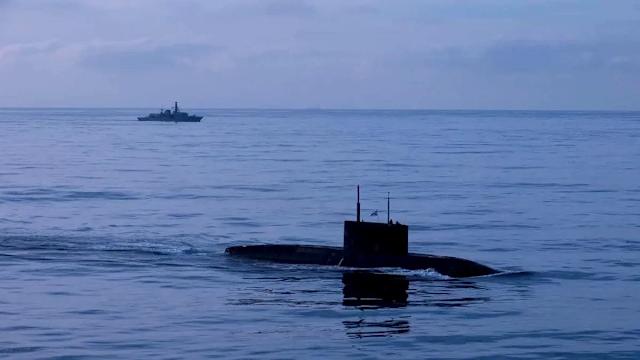
Navy chief warns UK is ‘holding on – but not by much’ as Russian naval build-up intensifies
At a major international maritime conference in London, First Sea Lord Sir Gwyn Jenkins issued one of the most direct warnings from the Royal Navy in decades: the UK risks losing its long-held strategic advantage in the Atlantic if it does not rapidly modernise and invest in naval defence. (The Independent)
A growing threat under the waves
Sir Gwyn said Russia’s renewed investment in its northern fleet — even while the country remains embroiled in its war in Ukraine — has dramatically shifted the balance of power beneath the waves. The White Sea and Arctic-Atlantic naval build-up, he warned, threatens to erode the UK’s post-World War II dominance of the Atlantic’s crucial sea lanes. (The Times)
He noted that in the past two years alone there has been a roughly 30% increase in Russian incursions into UK waters — including submarines, spy-ships and support vessels tracked by naval intelligence. (Newswav)
What worries him most is what happens beneath the surface — where undersea cables, energy pipelines, military communications and vital shipping routes criss-cross — areas notoriously difficult to monitor or defend against submarine and hybrid threats. (Sky News)
“No room for complacency” — a call for urgent action
Speaking at the International Sea Power Conference, Sir Gwyn did not mince his words: “We are holding on, but not by much. There is no room for complacency.” (This is the Coast)
He said that while the Navy remains “resolute and ready,” current resources — both in manpower and equipment — are “stretched thin.” Many vessels are under-manned or undergoing maintenance; the availability of submarines and surface ships for patrols and deterrence is reportedly lower than desired. (This is the Coast)
To counter the threat, the Navy plans to accelerate a shift toward a “hybrid fleet” model: a mixture of traditional crewed warships and submarines, combined with modern autonomous systems such as underwater drones, sensor networks and unmanned surface vessels — under a new initiative called Atlantic Bastion. (This is the Coast)
What’s at stake — more than naval pride
A loss of Atlantic dominance wouldn’t only be about naval prestige. The UK’s ability to defend its undersea infrastructure — from internet cables to energy pipelines — would be imperilled. Civilian and military communications, trade, and national security all rely on secure maritime corridors. (Sky News)
Moreover, failure to respond effectively could weaken the UK’s role within NATO at a time when alliance unity and readiness are under enormous strain. With increased Russian naval activity across Northern Europe and the Arctic, allies may look to the UK as a key maritime anchor — but only if it can meet the demands of modern naval warfare. (United 24 Media)
What the Royal Navy Wants — and What It Needs
Sir Gwyn and other senior officers are calling for:
- A significant increase in defence spending to match the speed and scale of threats posed by Russia’s naval expansion. (Financial Times)
- Faster procurement and deployment of new submarines, ships, drones and sensor systems — to ensure the UK maintains undersea detection and deterrence capabilities. (This is the Coast)
- Strengthened NATO cooperation and allied patrols in the North Atlantic and Arctic — shared responsibility is increasingly seen as essential. (AP News)
The wider context — a changing security landscape
This warning comes amid a broader shift in European security strategy. With the war in Ukraine ongoing and hybrid threats on the rise — from submarine incursions to cyber attacks and undersea sabotage — maritime defence is now viewed as central to national and alliance security. (The Independent)
For decades, the UK assumed supremacy under the Atlantic — but as Sir Gwyn bluntly stated, that assumption can no longer hold. Without decisive action, the advantage may slip — and the consequences, he warns, could be profound. (United 24 Media)
- International Puzzle Day: How Solving Problems Brings People Together
- Sir Cliff Richard Shares Cancer Diagnosis and Sends Message to King Charles
- The Great Divide: How Boomers and Millennials See Britain Totally Differently
- King Charles Faces Potential Mansion Tax Bill on His Private Homes
- Why Americans Think Brits Are Polite