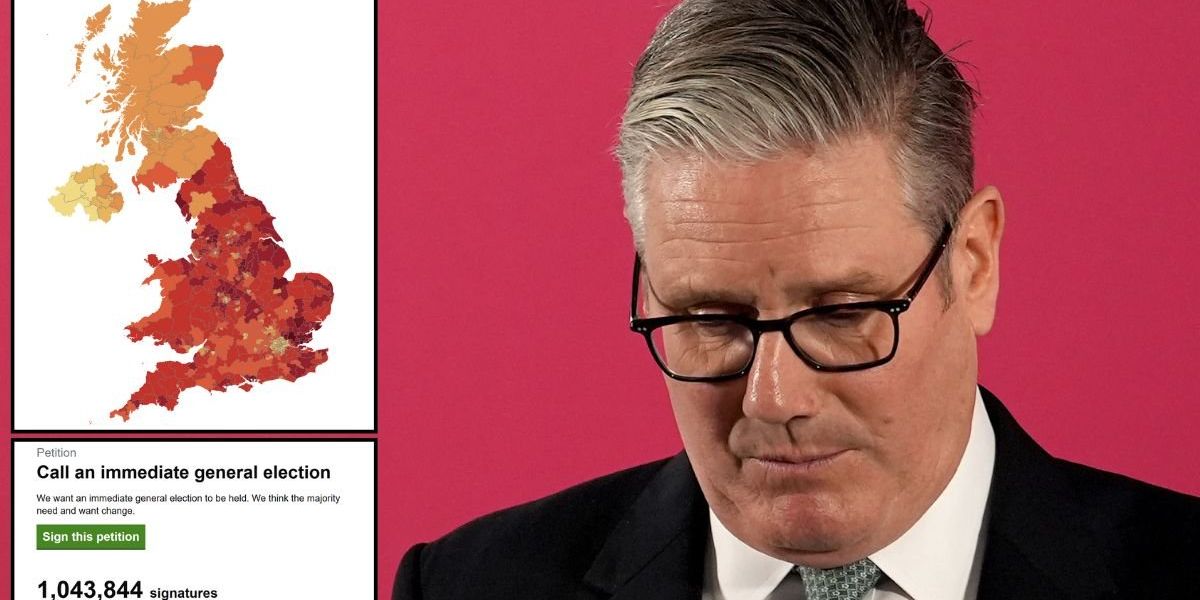
UK Potentially Set for Snap General Election as Petition Surpasses One Million Signatures
A petition demanding an immediate general election in the United Kingdom has now gathered over one million signatures — triggering a parliamentary response and prompting growing discussion of whether a snap poll could be on the cards. (Petitions – UK Government and Parliament)
The petition — titled “Call an immediate general election” — was originally launched earlier this year and rapidly gained momentum. Under the rules of the parliamentary petitions system, surpassing 100,000 signatures automatically brings the issue before Parliament for debate; crossing the one-million mark intensifies public pressure. (Petitions – UK Government and Parliament)
As a result, MPs have officially scheduled a Westminster Hall debate to consider the call for a snap election. The debate, set to take place in January 2026, will be led by Tory MP John Lamont. A government minister — likely representing the current administration — will respond to the demand. (London Loves Business)
What the Petition Reflects: Public Frustration and Political Discontent
The surge in signatures reflects widespread dissatisfaction among some members of the public — many feel that the current government has failed to deliver on its promises, or that national circumstances have deteriorated enough to justify a fresh mandate. For some, it is a means of registering discontent; for others, it represents genuine demand for new leadership. (www.ndtv.com)
Politically, the petition taps into a broader sense of instability. Voters frustrated by economic pressures, cost-of-living challenges, public-service concerns and perceived unmet expectations may view a new election as a chance for reset. For opposition parties and non-aligned movements, an early poll could open opportunities.
However, while the petition is a serious signal of public feeling, it does not guarantee a snap election. Under the current legislative framework — provided by Dissolution and Calling of Parliament Act 2022 — the power to call an election remains in the hands of the Prime Minister and the Monarch. (Wikipedia)
What an Early Election Would Take — Constitutional Realities and Political Will
Unlike past years when a fixed-term Parliament meant early elections required either a special act or a no-confidence vote, the 2022 legislation restored the traditional system: a Prime Minister may request dissolution from the Monarch — and a general election follows. (Wikipedia)
Ultimately, for this petition to trigger an election, the Prime Minister would need to ask for dissolution — and that depends on political calculation rather than petition strength. Historically, even heavily signed petitions have failed to force elections. For example, a previous petition calling for a general election in 2024 collected millions of signatures but did not lead to an immediate poll. (House of Commons Library)
What Happens Next — Debate, Pressure, but No Certainty
The scheduled Westminster Hall debate on 12 January 2026 will provide a formal platform for MPs to discuss the call. While symbolic, such a debate gives voice to public dissatisfaction and may influence how political parties position themselves ahead of future contests. (London Loves Business)
But even if the debate is strongly in favour, it does not bind the government to call an election. The decision remains a matter of political strategy — balancing risk, public sentiment, and timing.
For now, the petition’s success serves as a red flag to the government: millions of voters are expressing discontent. Whether that pressure suffices to topple the current parliamentary schedule is another matter entirely.
Why It Matters — Democracy, Frustration and Institutional Limits
This episode underlines a tension at the heart of modern British democracy: a grassroots mechanism — the e-petition system — allows citizens to express will and demand action. When a petition crosses a threshold, it forces parliamentary attention. (Petitions – UK Government and Parliament)
But it also exposes the limits: only a handful of seats hold power over national decisions. Citizens can petition, protest, or express discontent — yet the final decision remains political. This gap can fuel frustration when public mood and political reality diverge.
Nevertheless, the large number of signatures — and the fact Parliament will debate the petition — suggests rising pressure on the government to acknowledge that many feel a fresh mandate is overdue.
- International Puzzle Day: How Solving Problems Brings People Together
- Sir Cliff Richard Shares Cancer Diagnosis and Sends Message to King Charles
- The Great Divide: How Boomers and Millennials See Britain Totally Differently
- King Charles Faces Potential Mansion Tax Bill on His Private Homes
- Why Americans Think Brits Are Polite