Farage Accuses Starmer of Leading “Authoritarian Regime”
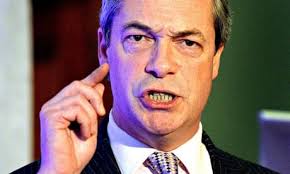
Nigel Farage has launched a fierce attack on Keir Starmer’s government, claiming that the Labour-led administration is drifting toward authoritarianism and undermining democratic freedoms. The declaration comes amid a broader confrontation over free speech, immigration policy, and recent legislative proposals. (Reuters)
Farage, leader of Reform UK, made the accusations during a high-profile speech to a US audience, asserting that Britain was transforming under Starmer into a “closed society,” with increasing controls over speech and dissent — especially through recent laws that critics say threaten civil liberties. (Reuters)
In his address, Farage argued that measures such as the contentious online safety legislation — which he and his party have strongly opposed — are part of a wider effort to stifle freedom of expression, limit political opposition, and extend the power of the state over ordinary citizens. (Wikipedia)
The Context — What Sparked Farage’s Outburst
The accusations come at a moment of growing national political tension. The governing Labour Party under Starmer has introduced a number of policies and reforms that have drawn criticism from across the political spectrum — ranging from immigration enforcement, proposed digital ID schemes, to the controversial Online Safety Act. For opponents, these measures raise fears about government overreach and erosion of civil liberties. (The Guardian)
Farage and Reform UK have positioned themselves as the primary political voice opposing what they describe as the creeping “authoritarian drift.” The speech in which Farage levelled his accusations came just weeks after the party pledged to repeal certain laws — including the Online Safety Act — if it ever gains power. (Wikipedia)
The context is further complicated by ongoing controversies within Reform UK itself — including serious allegations against party figures and former classmates of Farage that have resurfaced, linked to racism and antisemitism. Critics argue that Farage’s attacks on Starmer amount to political manoeuvre at a time when his own leadership is under scrutiny. (The Guardian)
Response from Starmer and Political Rivals — Dismissing the Claims
Starmer’s camp and other mainstream opponents have rejected Farage’s accusation as hyperbole. They argue the government’s reforms are aimed at strengthening social protections, modernising outdated systems, and tackling issues such as online harms, crime and unchecked immigration — not at dismantling democracy. (The Guardian)
Supporters of the government contend that Farage’s rhetoric plays to fear and division, rather than addressing Britain’s real challenges. Some see the comments as an effort to energise Reform UK’s base by positioning themselves as defenders of “freedom” — even as the party continues to face internal turmoil and questions over its own record. (The Guardian)
Meanwhile, civil-society groups, independent commentators, and opposition parties have warned against normalising alarmist language about “regime change,” suggesting that public discourse should remain grounded in fact, not exaggeration — especially on issues as serious as civil liberties and democratic norms.
What’s at Stake — Democracy, Public Trust and the Shape of UK Politics
Farage’s claims and the government’s response highlight deep divisions over the future direction of the UK. The core fault lines are not only about policy — such as immigration, social security, or online regulation — but also about how power should be exercised, how dissent is treated, and how much oversight the electorate should have.
For Reform UK and Farage, painting Starmer’s government as authoritarian may be a rallying call: a way to attract voters disillusioned with the status quo, fearful of further restrictions, or sceptical of political elites. For many critics, however, it risks inflaming polarisation and undermining constructive political discourse — especially at a time when trust in institutions is fragile.
As Britain heads toward what is shaping up to be a highly contested election cycle, claims about authoritarianism — and the reactions they provoke — may come to define not just who leads, but how the country debates issues of freedom, responsibility and governance.
- International Puzzle Day: How Solving Problems Brings People Together
- Sir Cliff Richard Shares Cancer Diagnosis and Sends Message to King Charles
- The Great Divide: How Boomers and Millennials See Britain Totally Differently
- King Charles Faces Potential Mansion Tax Bill on His Private Homes
- Why Americans Think Brits Are Polite